



5 Simple Steps to Keep Your Cowhide Rug Looking Brand New
June 3, 2025 - Carpet Cleaning, Home Cleaning
There’s something undeniably captivating about a beautiful cowhide rug. Whether it’s gracing your living room floor with its natural patterns or adding rustic charm to your bedroom, these genuine leather pieces bring warmth and character to any space. But here’s the thing about cowhide rugs, they’re not your typical throw rug that you can toss in the washing machine when things get messy.
These natural beauties require a bit more finesse and understanding. After all, you’re dealing with genuine leather that has its own personality and quirks. The good news? With the right approach, your cowhide rug can last for decades while maintaining its stunning appearance. It’s all about knowing how to treat this natural material with the respect it deserves.
Let’s dive into the five essential tips that will keep your cowhide rug looking fantastic for years to come. Trust me, once you get the hang of these techniques, caring for your rug becomes second nature.
How to Clean a Cowhide Rug: The Short Version
Vacuum it with an upholstery or soft brush head and the suction turned down, never a rotating brush bar. Blot spills straight away from the outside in, with a cloth that is damp rather than wet. For anything that needs more than water, mild soap or a leather cleaner, tested on a hidden patch first. Never soak a hide, never put heat near it, and never reach for bleach.
The rest of this guide goes through each of those properly, including what to do about creases and when a cow skin rug is past the point of a home clean.
Regular Maintenance and Prevention
Daily and Weekly Care
The secret to a long-lasting cowhide rug lies in consistent, gentle care. Think of it like tending to a garden, a little attention regularly goes much further than sporadic intensive efforts. Start by giving your rug a good shake outdoors every few days. This simple action removes surface dirt and prevents it from settling deep into the hide.
Vacuuming should become part of your weekly routine, but not with your usual floor vacuum settings. Cowhide requires a gentler touch. Use a brush attachment on low suction, and always work with the natural grain of the hair when possible. This prevents the hair from becoming matted or damaged.
Don’t forget about rotation either. Every month or so, turn your rug around or flip it to ensure even wear patterns. This prevents certain areas from becoming more worn than others, especially in high-traffic zones.
There is a health argument for the weekly pass as well as a cosmetic one. The Australasian Society of Clinical Immunology and Allergy recommends vacuuming carpets and rugs weekly as part of keeping dust mite allergens down at home.
Preventive Measures
Prevention really is better than cure when it comes to cowhide care. A quality rug pad underneath your cowhide serves multiple purposes. It prevents slipping, which can be a safety hazard, and it also reduces the mechanical stress on the hide itself. The cushioning effect helps preserve the natural oils in the leather.
Sunlight can be your rug’s worst enemy. Direct UV rays will fade the natural colours and can cause the leather to become brittle over time. Position your rug away from windows or use curtains and blinds to control light exposure during peak sun hours.
Humidity control matters more than most people realise. Leather is a natural material that responds to moisture in the air. Too dry, and it can crack. Too humid, and you risk mold or mildew. Aim for humidity levels between 30-50% if possible.

How to Vacuum a Cowhide Rug
Equipment and Settings
Your regular vacuum cleaner can work perfectly fine for cowhide rugs, but you need to make some adjustments. The key is reducing suction power and choosing the right attachment. Those rotating brush bars that work great on carpets? They’re too aggressive for cowhide and can actually damage the hair and surface.
Instead, opt for an upholstery attachment or a brush attachment designed for delicate surfaces. Many modern vacuums have adjustable suction controls, so dial it down to a gentler setting. If your vacuum doesn’t have variable suction, try partially covering the hose opening with your hand to reduce the pull.
Technique
Vacuuming cowhide is more like grooming than cleaning. Work in smooth, overlapping strokes, and pay attention to the direction of the hair. While it’s not always possible to follow the hair growth perfectly due to the natural patterns, try to avoid working against it when you can.
Take your time around the edges and corners where dust and debris love to accumulate. These areas often need a bit more attention, but maintain that gentle approach. If you encounter a stubborn piece of debris, it’s better to pick it up by hand than to increase suction power.
For homes with pets or high foot traffic, weekly vacuuming is ideal. In quieter households, every two weeks might suffice. Let your rug’s appearance guide you.
How to Clean Spills and Stains on a Cowhide Rug
Immediate Response
When accidents happen, and they will, speed is your best friend. The faster you respond to a spill, the better your chances of preventing a permanent stain. Grab a clean, dry cloth or paper towels and blot the spill immediately. The key word here is “blot,” not rub. Rubbing can push the liquid deeper into the hide and spread the stain.
Work from the outside edges of the spill toward the centre to prevent the stain from spreading. Keep blotting until no more liquid transfers to your cloth. Sometimes this initial response is all you need to completely remove the problem.
Cleaning Solutions
For most stains, a simple solution of mild soap and lukewarm water does the trick. Think gentle dish soap or saddle soap, not harsh detergents. Mix a small amount with water to create a barely sudsy solution. You want cleaning power without overwhelming the leather.
For tougher stains, specialised leather cleaners are worth the investment. These products are formulated specifically for natural hides and won’t cause the damage that household cleaners might. Always test any cleaner on an inconspicuous area first.
White vinegar mixed with water (about 1:1 ratio) can handle odours and some stains naturally. It’s particularly effective for pet accidents, though you’ll want to follow up with a leather conditioner since vinegar can be slightly drying.
Specific Stain Types
Liquid spills like wine, coffee, or juice require immediate blotting followed by gentle cleaning with your soap solution. Work carefully and don’t oversaturate the area. For red wine, some people swear by blotting with white wine first, though plain water works fine too.
Grease stains are trickier beasts. Sometimes cornstarch or baking soda can absorb fresh grease if you sprinkle it on immediately and let it sit for several hours. Vacuum up the powder and assess whether further cleaning is needed.
Pet accidents need quick action to prevent odours from setting in. After blotting up the mess, clean with your vinegar solution and ensure the area dries completely. A fan can help speed up the drying process.
How to Deep Clean a Cowhide Rug
When Deep Cleaning Is Needed
Even with perfect maintenance, your cowhide rug will eventually need a more thorough cleaning. Signs include a dingy overall appearance, persistent odors, or stains that spot cleaning couldn’t handle. Generally, deep cleaning once or twice a year is sufficient for most households.
Don’t wait until your rug looks terrible before considering deep cleaning. It’s much easier to maintain good condition than to restore a neglected rug.
Professional vs. DIY Cleaning
Professional carpet and rug cleaning services have specialised equipment and experience with leather goods. They can handle stubborn stains and overall cleaning without risking damage to your rug. The cost typically ranges from $100-300 depending on size and condition.
However, many cowhide rugs can be successfully deep cleaned at home with patience and the right approach. The main risks are oversaturating the leather or using inappropriate cleaning products. If your rug is particularly valuable or antique, professional cleaning is probably worth the investment.
DIY Deep Cleaning Process
If you’re tackling deep cleaning yourself, start by removing all surface dirt with thorough vacuuming. Prepare your cleaning solution using leather cleaner or mild soap and water. Work in small sections, using a damp (not wet) cloth to clean the surface.
The drying process is crucial. Never use direct heat like hair dryers or place the rug in direct sunlight to speed things up. These can cause cracking and permanent damage. Instead, ensure good air circulation and allow natural drying, which can take 24-48 hours.
After the rug is completely dry, consider applying a leather conditioner to restore moisture and flexibility to the hide.
Proper Storage and Seasonal Care
Long-term Storage
Sometimes you need to store your cowhide rug for extended periods. Proper storage technique can mean the difference between retrieving a rug in perfect condition or finding one that’s developed permanent creases or other damage.
Clean the rug thoroughly before storage and ensure it’s completely dry. When folding is necessary, fold with the hair side facing outward to prevent the hair from getting permanently bent. However, rolling is preferable to folding when space allows.
Choose a storage location that’s cool, dry, and has some air circulation. Avoid basements prone to dampness or attics that experience extreme temperature swings. Cedar blocks or lavender sachets can help deter insects without using harsh chemicals.
Seasonal Considerations
Summer brings challenges like increased humidity and potentially more foot traffic from outdoor activities. You might need to increase your cleaning frequency and pay extra attention to humidity control in your home.
Winter’s dry air can be problematic for leather goods. If your home gets very dry during heating season, consider using a humidifier or at least monitoring humidity levels. Cracked leather is difficult and expensive to repair.
This is not just a rug thing. Australian conservators who look after museum collections treat hide and leather the same way: the AICCM notes that in high humidity organic materials such as wood and leather swell or change shape, and that light does extreme and irreversible damage to materials including fur.
Their guidance is written for collections rather than living rooms, but a cow skin rug is the same material behaving the same way. Keep it out of the sunniest spot in the house and it will hold its colour for years longer.
Handling and Moving
When you need to move your rug, avoid dragging it across surfaces. This can damage both the rug and your floors. Instead, roll or fold carefully and carry it. For larger rugs, enlist help rather than struggling alone and risking drops or awkward bending.

Common Mistakes to Avoid
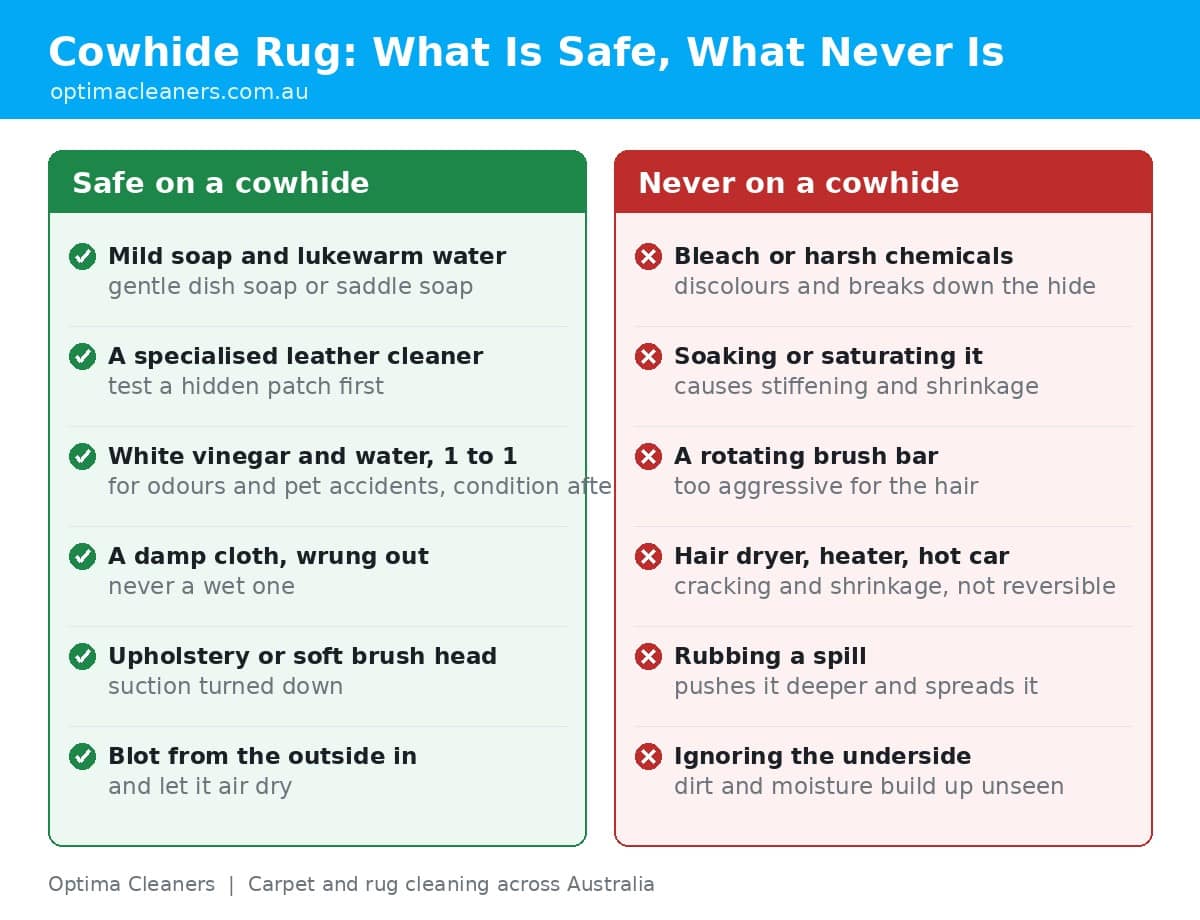
Some mistakes can cause permanent damage to your cowhide rug. Never use bleach or harsh chemicals, even if you’re dealing with a stubborn stain. These can discolor the leather or cause it to deteriorate rapidly.
Overwetting is another common error. Leather should never be soaked or saturated with water. This can cause stiffening, shrinkage, or even rotting of the hide. Always use damp cloths rather than wet ones.
Heat damage happens more often than you might think. Placing wet rugs near heaters, using hair dryers for quick drying, or leaving rugs in hot cars can cause irreversible cracking and shrinkage.
Don’t neglect the backside of your rug either. Dirt and moisture can accumulate on the reverse side, leading to problems you might not notice until they’re severe.
When a Cowhide Rug Needs a Professional
Learning to recognise early warning signs can save your rug from more serious damage. Small cracks in the leather, areas that feel stiff or brittle, or persistent odors despite cleaning efforts all warrant attention.
Colour changes or fading might indicate UV damage or improper cleaning. If you notice hair loss in specific areas, it could signal underlying leather problems or excessive wear.
Professional restoration can sometimes salvage rugs that seem beyond hope, but it’s expensive and not always successful. Regular maintenance and proper care are always more cost-effective than restoration efforts.
How to Get Creases Out of a Cowhide Rug
Most creases come from the way the hide was folded in transit, and most of them drop out on their own. Lay the rug flat, hair side up, somewhere it will be left alone and out of direct sun. Gravity and a few days of normal room temperature do the bulk of the work.
If a fold is stubborn, lay the rug hair side down and put a weight along the crease, books or anything flat and heavy, for a day or two. A hide that has been rolled the wrong way for months can take a week to settle.
What not to do is reach for an iron or a hair dryer. Heat is the one thing a hide does not forgive, and a crease you could have waited out becomes a crack you cannot.
Common Questions About Cleaning a Cowhide Rug
How do you clean a cowhide rug?
Vacuum regularly with a soft brush or upholstery head and the suction turned down. Blot spills as they happen, working from the outside of the spill inwards, with a damp cloth. Use mild soap and lukewarm water for most marks, and a dedicated leather cleaner for anything tougher, always testing a hidden corner first. Let it air dry flat, away from heat and direct sun.
Can you vacuum a cowhide rug?
Yes, and you should. The thing to avoid is the rotating brush bar, which is too aggressive for the hair. Use an upholstery attachment or a soft brush head instead. CHOICE makes the same point about powered brush heads on delicate surfaces: the brush head can cause pilling or fraying where it rubs.
Can you steam clean or wet a cowhide rug?
No. A hide is leather with the hair still on it, and soaking it leads to stiffening, shrinkage and in bad cases the hide rotting from the back. Damp is the limit. That is also why a cowhide should never go in a washing machine, whatever its size.
Can you dry clean a cowhide rug?
A standard clothing dry cleaner is not the place for it. Leather and hide need a specialist, and a rug cleaner who handles hides will use a low moisture method rather than the solvents a suit goes through. If the hide is valuable or the stain has been there a while, ask before anything gets used on it.
How do you get creases out of a cowhide rug?
Lay it flat and give it time, hair side up, out of direct sun. For a stubborn fold, turn it hair side down and weight the crease for a day or two. Never use an iron or a hair dryer on it.
Do cowhide rugs shed?
A little, early on, and then it settles. A new hide will drop some loose hair for the first few weeks, which is the tannery trim working its way out rather than anything going wrong. Vacuum gently and it passes. Shedding that starts later, or comes with the hair feeling brittle, usually means the hide has dried out or had heat near it.
Keeping Your Cowhide Beautiful for Years
Your cowhide rug is more than a floor covering; it’s a piece of natural artistry that deserves thoughtful care. These five essential tips provide the foundation for maintaining your rug’s beauty and extending its lifespan significantly.
Remember that consistency matters more than intensity when it comes to cowhide care. Regular gentle maintenance will always outperform sporadic deep cleaning efforts. Your rug will reward proper care with decades of natural beauty and durability.
The time you invest in learning and practising these techniques pays dividends in the long run.
Not only will your rug maintain its appearance, but you’ll also develop confidence in handling any cleaning challenges that arise. With these skills in your toolkit, you can enjoy your cowhide rug worry-free, knowing you have everything under control.
A cow hide is a one off piece of leather, so there is no second one if a home clean goes wrong. If the hide is valuable, the stain has set, or you are not sure what you are looking at, our technicians check the hide before anything is used on it. We clean rugs across Brisbane, Perth, Melbourne, Sydney, Adelaide, Canberra and the Gold Coast.
If you want the basics on the rest of the floor while you are at it, we have guides on cleaning carpet by hand and on keeping carpets clean between professional visits.
Author Profile

- Radoslav is a managing director at Optima Cleaners, but copywriting has been one of his passions for many years. When he's not hunched over his keyboard, you'll find Radoslav exploring quaint bookstores for inspiration or sipping espresso at his favorite local café, always on the hunt for the next big idea to ignite a brand's success. With a pen in one hand and a coffee cup in the other, Radoslav continues to captivate audiences and breathe life into every brand he touches.
Latest entries
 Oven CleaningOctober 6, 2026Built-In or Balcony BBQ? What to Sort Before a Clean
- Upholstery cleaningSeptember 16, 2026Why Your Freshly Cleaned Sofa Might Look Worse
- Oven CleaningSeptember 5, 2026Is a Dirty Oven Dangerous? What Burnt-On Grease Really Does
- Window cleaningJuly 29, 2025Windows and Mirror Cleaning: Professional Secrets from Optima Cleaners

Previously
What to Clean Before Guests Arrive (And What You Can Totally Ignore)
June 19, 2025
Next
Steam Cleaning vs Dry Cleaning for Upholstery: Which Is Better?
May 16, 2025Latest Blog Posts

October 6, 2026 - Oven Cleaning
Built-In or Balcony BBQ? What to Sort Before a Clean
Most BBQ cleaning advice assumes a freestanding hooded BBQ on a concrete patio, a few steps from a garden tap....
Read More

September 16, 2026 - Upholstery cleaning
Why Your Freshly Cleaned Sofa Might Look Worse
Why stains reappear after sofa cleaning, what water damage does inside cushion fill, and why a deep clean can look like nothing happened. Four real jobs.

September 5, 2026 - Oven Cleaning
Is a Dirty Oven Dangerous? What Burnt-On Grease Really Does
Most people live with a dirty oven until something forces their hand. Usually that means after a spill has burned...
Read More

July 29, 2025 - Window cleaning
Windows and Mirror Cleaning: Professional Secrets from Optima Cleaners
You know that feeling when you’ve spent twenty minutes scrubbing your bathroom mirror, only to step back and see more...
Read More
July 8, 2025 - Home Cleaning
Essential Australian Home Defense: Protecting Your Property from Our Harshest Elements
Most homeowners think gutter cleaning is about aesthetics or maybe preventing a bit of overflow during a storm. That thinking...
Read More

June 19, 2025 - DIY cleaning, Home Cleaning
What to Clean Before Guests Arrive (And What You Can Totally Ignore)
The text notification pops up on your phone: “Can’t wait to see you this weekend!” Your heart does a little...
Read More
June 3, 2025 - Carpet Cleaning, Home Cleaning
5 Simple Steps to Keep Your Cowhide Rug Looking Brand New
There’s something undeniably captivating about a beautiful cowhide rug. Whether it’s gracing your living room floor with its natural patterns...
Read More
May 16, 2025 - Mattress Cleaning, Upholstery cleaning
Steam Cleaning vs Dry Cleaning for Upholstery: Which Is Better?
If you’ve got a well-loved sofa or an armchair that’s seen a few too many movie nights, chances are you’re...
Read More

May 6, 2025 - Spring cleaning, Tips and tricks
How to stop insects from taking over your home naturally and effectively
Why Insects Invade Your Home in the First Place If you’ve ever spotted a trail of ants across your kitchen...
Read More

April 15, 2025 - Carpet Cleaning, Tips and tricks
6 Methods to Remove Crayon From Your Carpet
It happens in almost every home with small children at some point – that heart-stopping moment when you discover bright...
Read More