


Is a Dirty Oven Dangerous? What Burnt-On Grease Really Does
September 5, 2026 - Oven Cleaning
Most people live with a dirty oven until something forces their hand. Usually that means after a spill has burned badly enough to set off the smoke alarm, or when a guest is coming over and the kitchen smell is giving things away.
It’s understandable. Oven cleaning is uncomfortable, it takes a long time, and the results are rarely as good as you’d hope after forty minutes on your hands and knees with a can of spray foam.
What most people don’t realise is that a dirty oven is more than an appearance problem. It’s a safety issue, a health issue, and once it’s been long enough, it changes how well your oven cooks. So it’s worth knowing what’s going on in there, and what a professional oven clean covers that a weekend scrub doesn’t.
The Real Risk of Burnt-On Grease
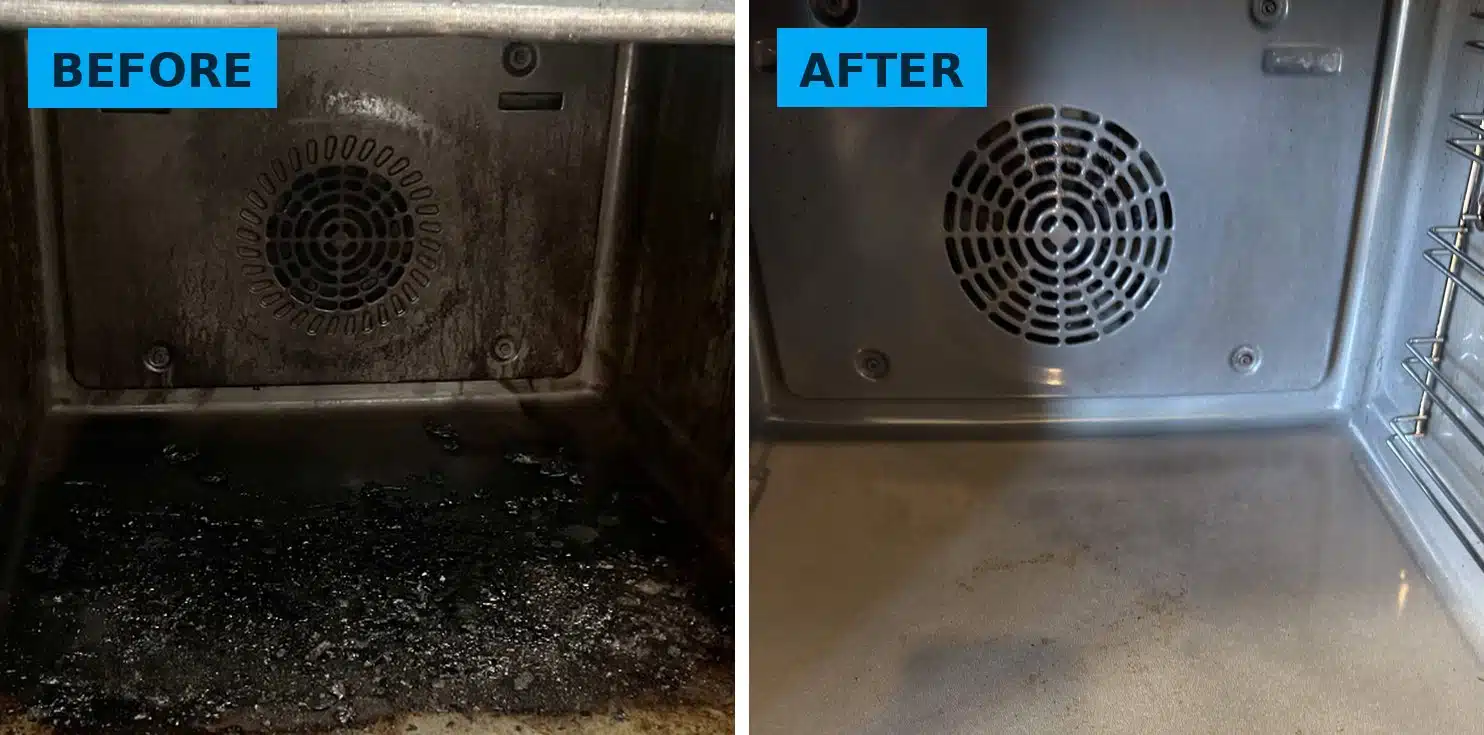
Every time you cook, whether that’s roasting, baking or grilling, fats and oils splatter onto the oven walls, floor and door. At high heat they carbonise. That black residue is no longer old food. It’s hardened carbon and oxidised grease, and it causes three problems.
First, it burns. Every time you heat the oven, the carbon residue gets hotter than the surfaces around it. If there’s enough buildup it can ignite, causing a grease fire inside the oven. Those fires are difficult to put out, because the fuel is baked into the cavity walls. The Queensland Fire Department puts it plainly in its appliance fire safety advice: keep the oven, stovetop and rangehood filters clean and clear of grease.
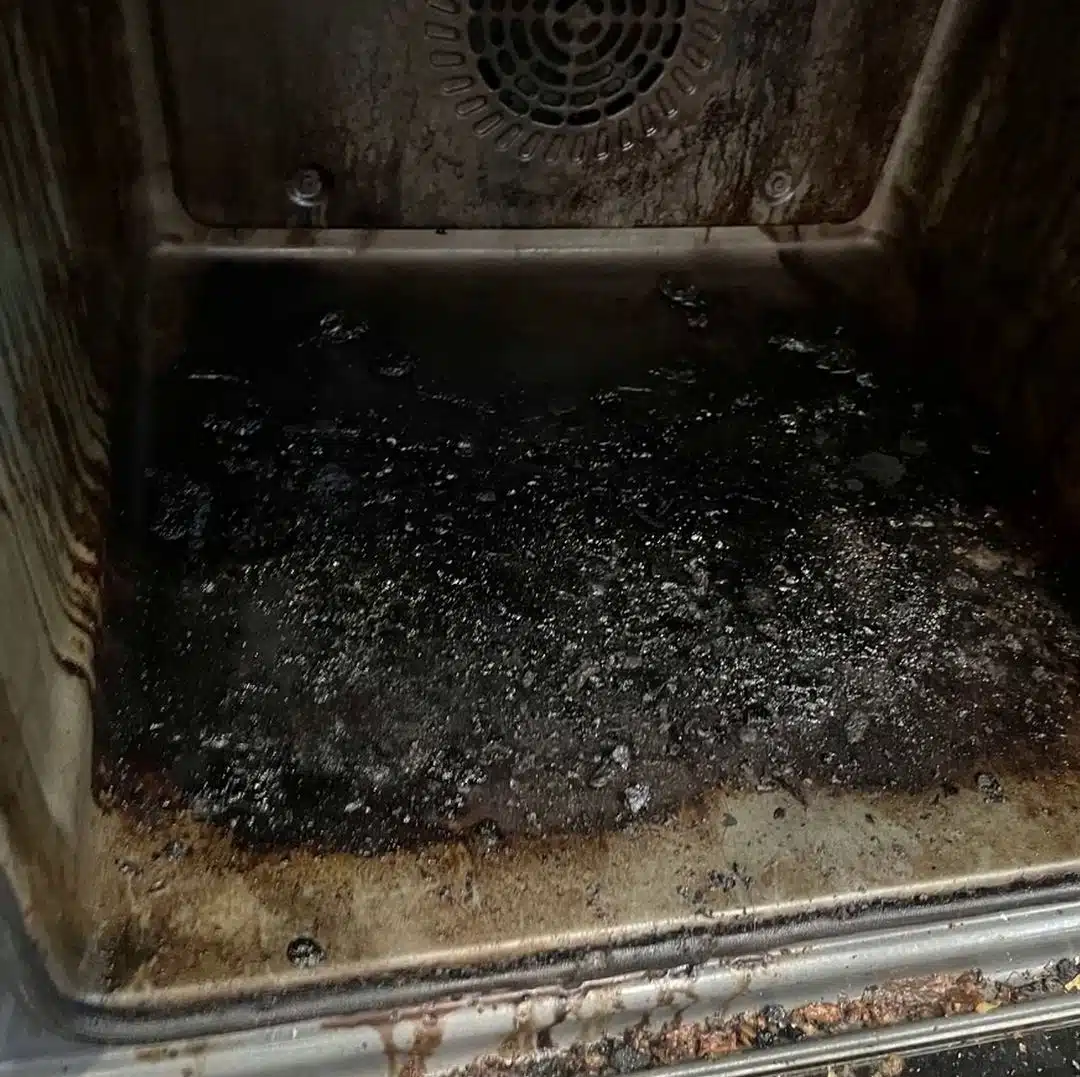
Second, it produces smoke. Well before it reaches ignition point, burning residue fills your kitchen with smoke containing volatile organic compounds and other combustion byproducts. If you’ve noticed your oven smells when it heats up, that smell is fumes coming off carbonised grease. Not ideal in a room where you’re preparing food.
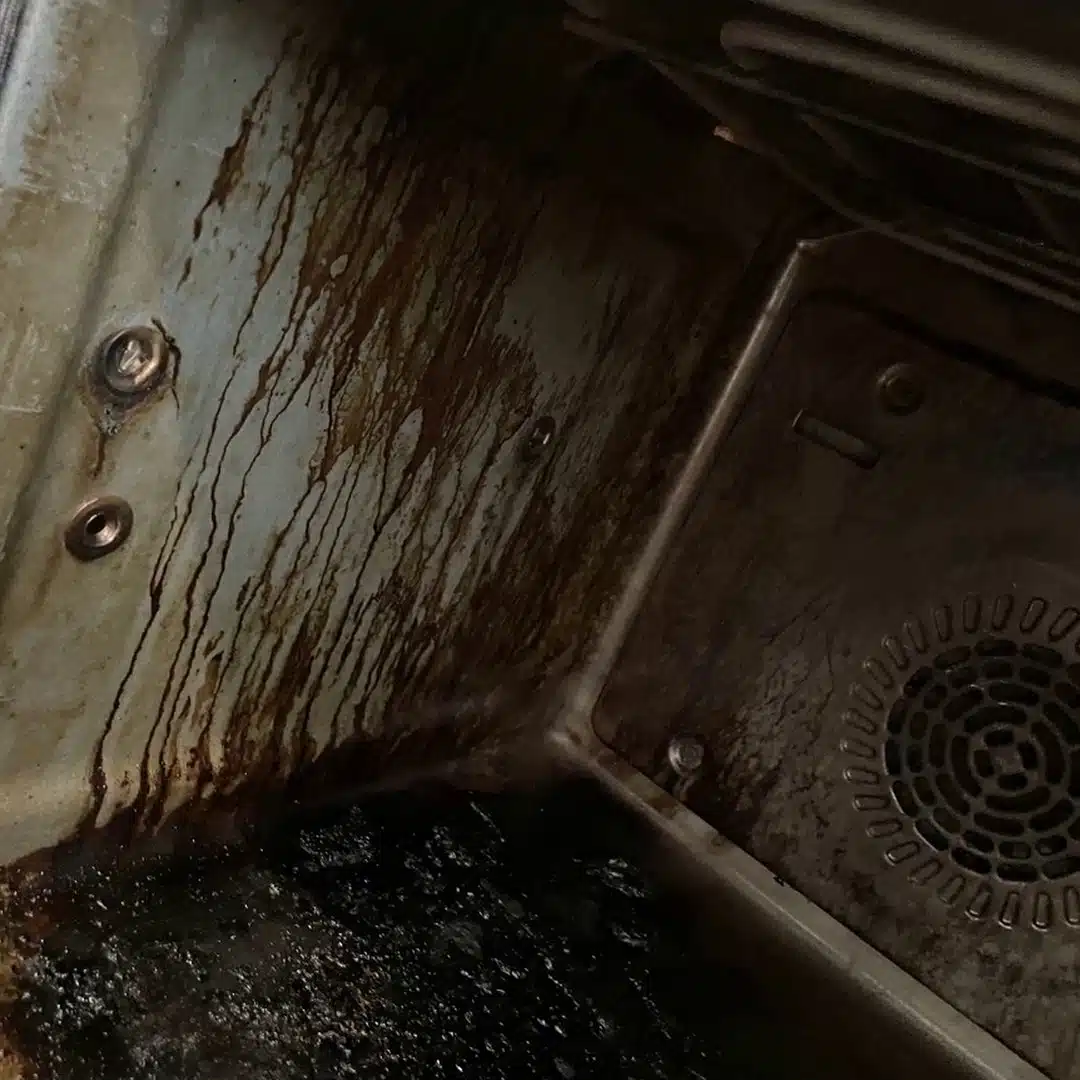
Third, it affects performance. A heavily soiled oven takes longer to reach temperature, heats unevenly, and gives less consistent results. If your baking keeps coming out wrong and you haven’t changed the recipe, the oven might be the problem.
What DIY Oven Cleaning Misses
Supermarket oven cleaners do work, up to a point. They break down grease on accessible surfaces, and a decent scrub will lift a fair amount of buildup. But there is one area home cleaning cannot reach at all.
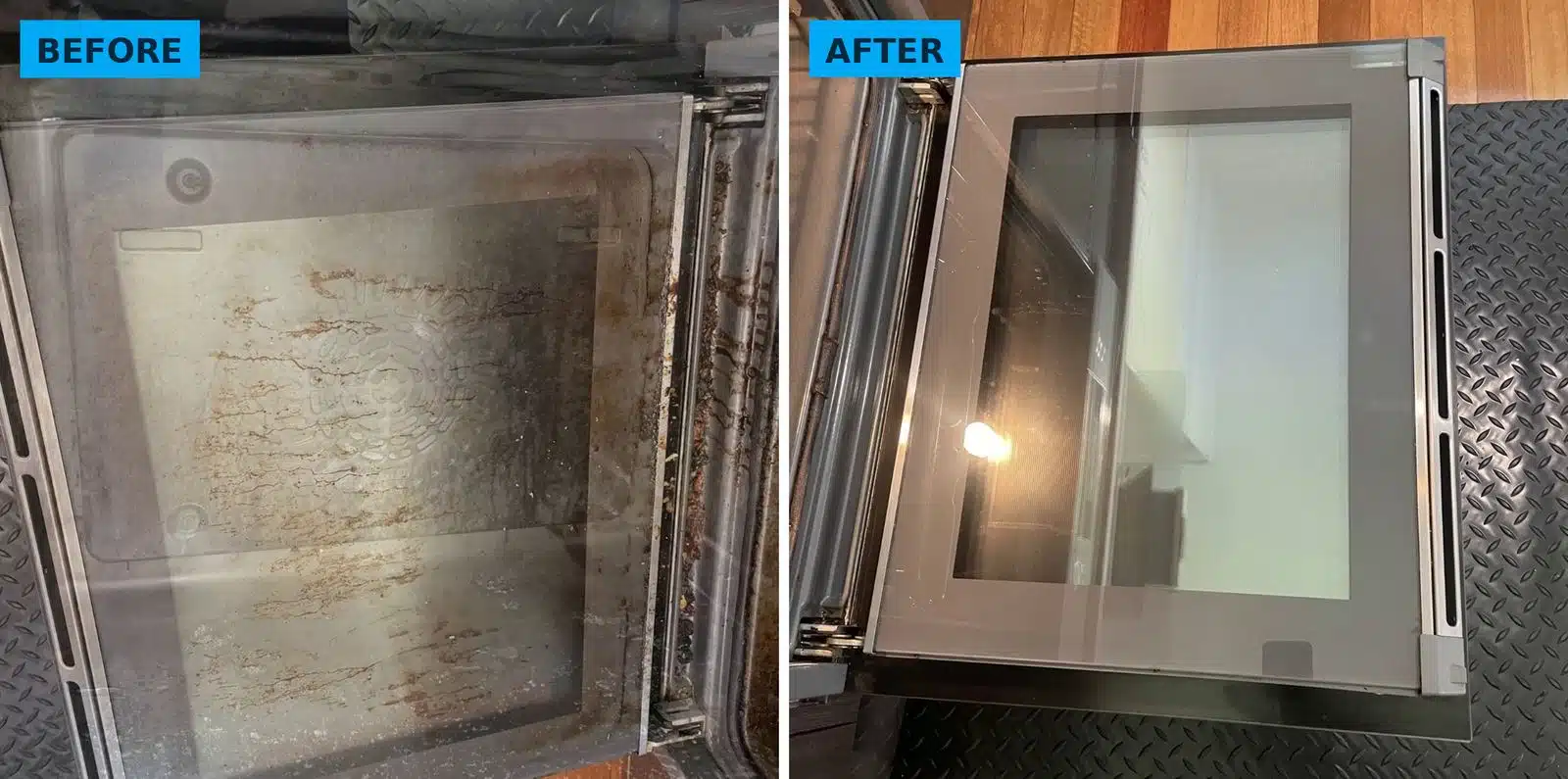
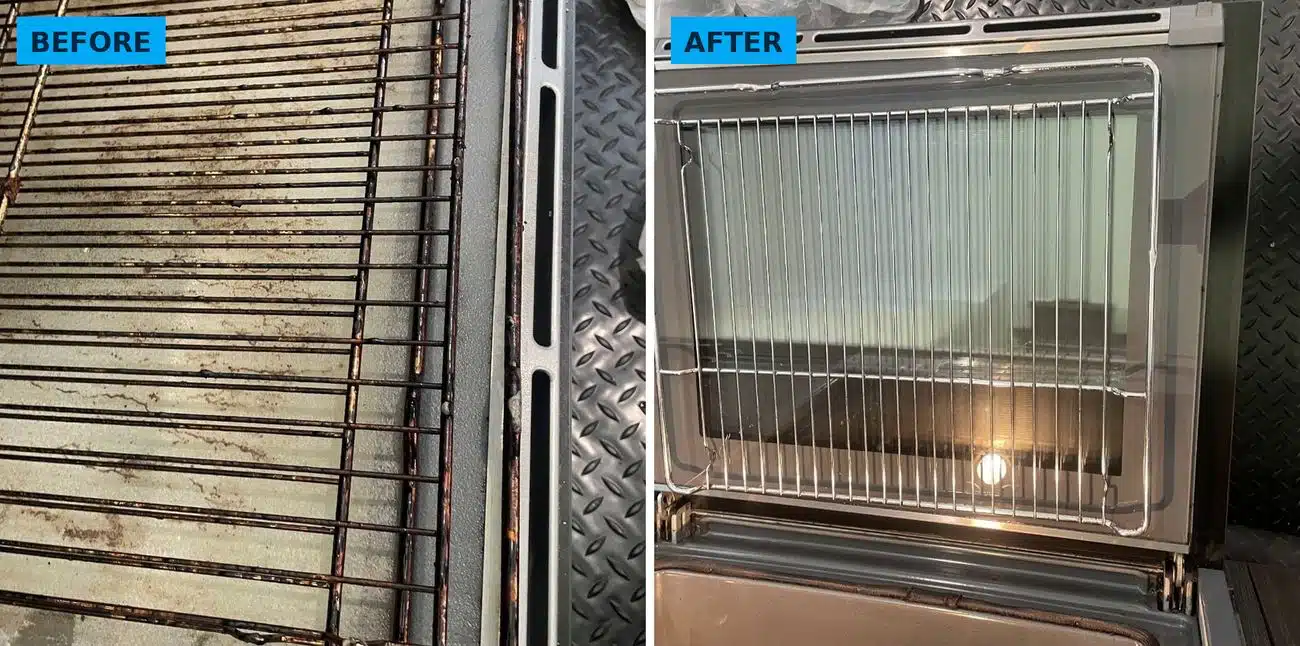
- Between the door glass panels. Most oven doors have two or three layers of glass. Grease, steam and food particles work their way between the panels through the ventilation gaps. Reaching that space means taking the door off, which most homeowners don’t know how to do safely, and it’s usually where the worst of the visible grime sits.
The rubber seal, the heating element, the racks and the corners all get missed too. We’ve covered how to tackle those at home in our guide to removing baked-on oven grime, linked at the bottom of this page.
The point for this article is simpler. Each layer of new grease bonds to the residue underneath it, and the parts you cannot reach are the parts that keep burning every time you turn the oven on.
What a Professional Oven Clean Involves
A professional clean is a structured process rather than a quick wipe-down. The technician photographs the oven before starting, then takes the door off so the glass panels can be separated and cleaned between. That’s the step home cleans skip, and it’s usually where the worst of the visible grime sits. Racks and trays are degreased separately while the cavity walls and fan get scrubbed, the seal and knobs are cleaned, and the oven is reassembled and run briefly to confirm nothing is left smoking.
You can see everything that’s included on our oven and BBQ cleaning page.
How Often Should You Get Your Oven Professionally Cleaned?
For a household cooking four or five times a week, once a year is a reasonable baseline. If you do a lot of high-heat cooking with fats, roasting and grilling in particular, every six months is better.
Signs you need one sooner:
- Smoke or a smell when the oven heats up, even with nothing in it
- Black residue on the cavity walls or door glass that won’t wipe off
- Uneven cooking or hot spots that weren’t there before
- Grease visible between the door glass panels
If you’ve never had your oven professionally cleaned, or it’s been more than two years, it’s worth booking one before it gets worse.
Frequently Asked Questions
Does professional oven cleaning use harsh chemicals?
The products are commercial-grade, but they’re applied and removed in a controlled process, and the oven is wiped down and tested before the technician leaves. There’s no lingering chemical smell and the oven is safe to use straight away.
How long does an oven clean take?
Allow around two hours for a standard single oven. Double ovens and units with heavy buildup take longer, and the technician will tell you on arrival if yours is one of them.
Do I need to be home?
Someone needs to let the technician in and be there at the end, but you don’t need to watch the job. Most clients get on with something else while the work happens.
Can you clean the racks and trays as well?
Yes. Racks, trays and any removable guides are degreased separately as part of the clean, not left for you to deal with afterwards.
Will cleaning damage my oven?
No. The methods are matched to the surface type, and the technician works around the heating element and fan rather than scrubbing over them, which is where home cleaning most often causes damage.
Book an Oven Clean with Optima
Optima Cleaners provides professional oven cleaning in Brisbane, Perth, Melbourne, Sydney, Adelaide, Canberra and the Gold Coast. Our technicians use commercial-grade products and a structured process, not the same can of foam you’d buy at the supermarket.
Questions about what’s included, or want to combine your oven clean with another service? Get in touch and we’ll sort it out.
Related Reading

Author Profile

- Radoslav is a managing director at Optima Cleaners, but copywriting has been one of his passions for many years. When he's not hunched over his keyboard, you'll find Radoslav exploring quaint bookstores for inspiration or sipping espresso at his favorite local café, always on the hunt for the next big idea to ignite a brand's success. With a pen in one hand and a coffee cup in the other, Radoslav continues to captivate audiences and breathe life into every brand he touches.
Latest entries
 Oven CleaningOctober 6, 2026Built-In or Balcony BBQ? What to Sort Before a Clean
- Upholstery cleaningSeptember 16, 2026Why Your Freshly Cleaned Sofa Might Look Worse
- Oven CleaningSeptember 5, 2026Is a Dirty Oven Dangerous? What Burnt-On Grease Really Does
- Window cleaningJuly 29, 2025Windows and Mirror Cleaning: Professional Secrets from Optima Cleaners
Previously
Why Your Freshly Cleaned Sofa Might Look Worse
September 16, 2026
Next
Windows and Mirror Cleaning: Professional Secrets from Optima Cleaners
July 29, 2025Latest Blog Posts
October 6, 2026 - Oven Cleaning
Built-In or Balcony BBQ? What to Sort Before a Clean
Most BBQ cleaning advice assumes a freestanding hooded BBQ on a concrete patio, a few steps from a garden tap....
Read More

September 16, 2026 - Upholstery cleaning
Why Your Freshly Cleaned Sofa Might Look Worse
Why stains reappear after sofa cleaning, what water damage does inside cushion fill, and why a deep clean can look like nothing happened. Four real jobs.
September 5, 2026 - Oven Cleaning
Is a Dirty Oven Dangerous? What Burnt-On Grease Really Does
Most people live with a dirty oven until something forces their hand. Usually that means after a spill has burned...
Read More
July 29, 2025 - Window cleaning
Windows and Mirror Cleaning: Professional Secrets from Optima Cleaners
You know that feeling when you’ve spent twenty minutes scrubbing your bathroom mirror, only to step back and see more...
Read More
July 8, 2025 - Home Cleaning
Essential Australian Home Defense: Protecting Your Property from Our Harshest Elements
Most homeowners think gutter cleaning is about aesthetics or maybe preventing a bit of overflow during a storm. That thinking...
Read More

June 19, 2025 - DIY cleaning, Home Cleaning
What to Clean Before Guests Arrive (And What You Can Totally Ignore)
The text notification pops up on your phone: “Can’t wait to see you this weekend!” Your heart does a little...
Read More

June 3, 2025 - Carpet Cleaning, Home Cleaning
5 Simple Steps to Keep Your Cowhide Rug Looking Brand New
There’s something undeniably captivating about a beautiful cowhide rug. Whether it’s gracing your living room floor with its natural patterns...
Read More
May 16, 2025 - Mattress Cleaning, Upholstery cleaning
Steam Cleaning vs Dry Cleaning for Upholstery: Which Is Better?
If you’ve got a well-loved sofa or an armchair that’s seen a few too many movie nights, chances are you’re...
Read More

May 6, 2025 - Spring cleaning, Tips and tricks
How to stop insects from taking over your home naturally and effectively
Why Insects Invade Your Home in the First Place If you’ve ever spotted a trail of ants across your kitchen...
Read More

April 15, 2025 - Carpet Cleaning, Tips and tricks
6 Methods to Remove Crayon From Your Carpet
It happens in almost every home with small children at some point – that heart-stopping moment when you discover bright...
Read More