


Must-Have Cleaning Essentials for a Spotless Home
January 3, 2025 - Cleaning, Home Cleaning, Oven Cleaning, Tips and tricks
A spotless home is much easier to maintain when your essential cleaning supplies are already within reach. You do not need an overflowing cupboard of products. You need a practical kit that covers everyday mess, deeper cleaning tasks, and a few problem areas that need more attention.
The best cleaning essentials are simple, safe to use, easy to store, and suitable for the surfaces in your home. With the right basics, small spills, dust, bathroom build-up, kitchen grease, and floor mess can be handled before they turn into bigger jobs.
This guide breaks down the must-have cleaning essentials every home should have, what each one is best for, and when it may be time to call in professional cleaners
What Essential Cleaning Supplies Does Every Home Need?
Every home needs a small set of core cleaning supplies: a multi-purpose cleaner, microfibre cloths, sponges, a dustpan and brush, a vacuum cleaner, a mop, bathroom cleaning tools, glass cleaner, and a safe way to store everything.
Essential cleaning supplies checklist
- Multi-purpose cleaner
- Microfibre cloths
- Sponges and scrubbers
- Dustpan and brush
- Vacuum cleaner
- Glass cleaner and squeegee
- Toilet brush and cleaner
- Mop and bucket
- Extendable duster
- Oven cleaner
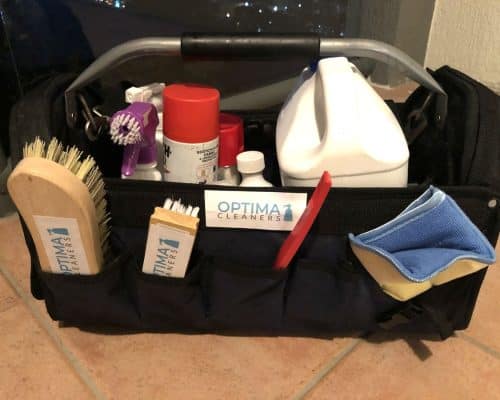
- Cleaning caddy
- Rubber gloves
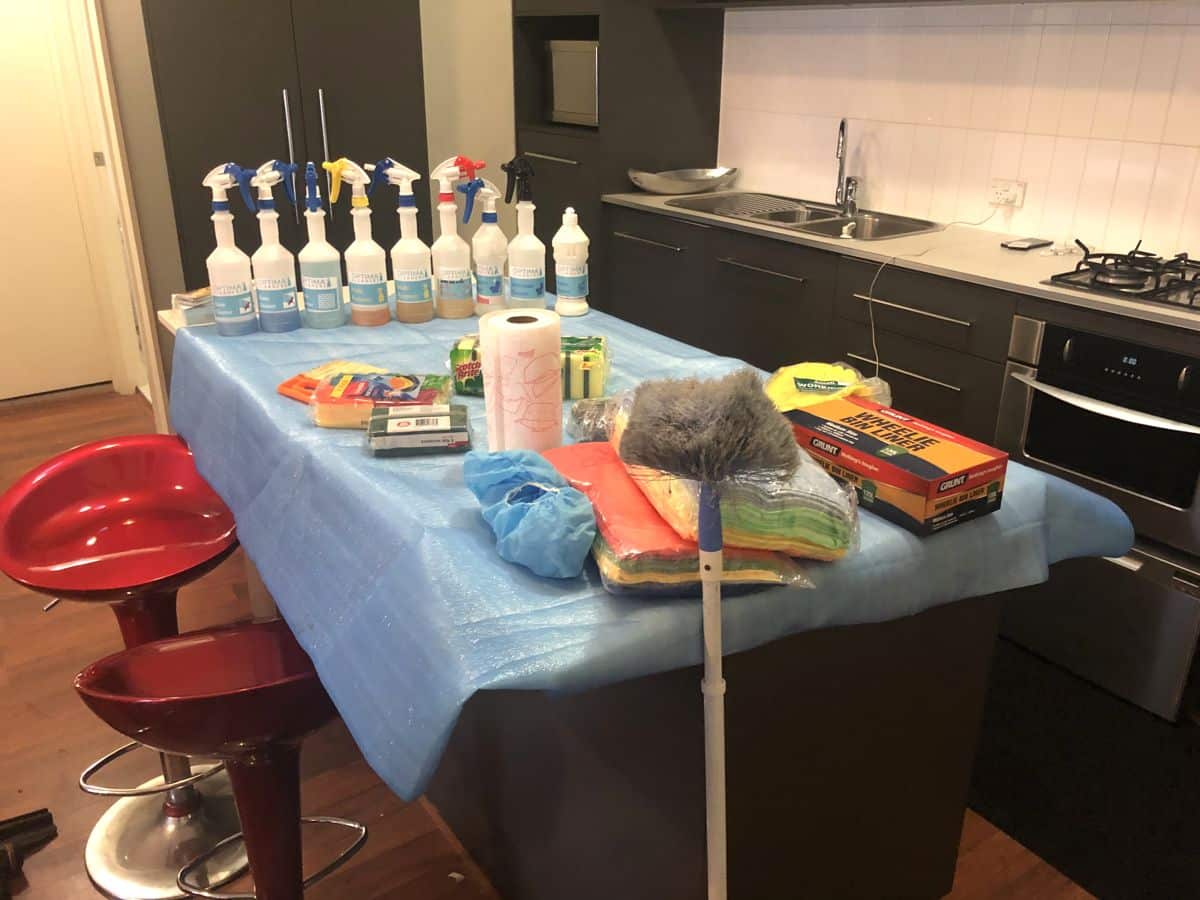
This kit covers most everyday cleaning tasks, from wiping benches to cleaning floors, mirrors, bathrooms, kitchens, and high-touch surfaces.
What Should Be in a Basic Home Cleaning Kit?
A basic home cleaning kit should include the tools you reach for every week. These are the supplies that make quick cleaning easier and stop small messes from becoming a full weekend job. If you also want the order professional cleaners work in, see our guide on how to clean house fast. For a closer look at the tools themselves, see our guide to the best cleaning tools for your home.
Multi-Purpose Cleaner
A multi-purpose cleaner is useful for everyday surfaces such as benchtops, cupboards, tiles, handles, and some appliances. It saves time because you do not need to switch products for every small task.
Best for:
- Kitchen benches
- Bathroom surfaces
- Dining tables
- Cupboard doors
- Light spills
Check the label before using it on stone, timber, stainless steel, or delicate finishes. Some surfaces need a specialised cleaner to avoid dullness or damage.
One thing our technicians regularly notice on jobs: multi-purpose cleaners are often sprayed directly onto stainless steel appliances and wiped across the grain. This leaves visible streaks and can gradually dull the finish over time. Always wipe with the grain and use a dedicated stainless steel cleaner for a streak-free result.
Microfibre Cloths
Microfibre cloths are one of the most useful cleaning essentials because they absorb moisture, pick up dust, and wipe surfaces without leaving much lint behind.
Why they help:
- Reusable and washable
- Good for streak-free wiping
- Gentle on most surfaces
- Useful for dust and spills
- Reduces paper towel waste
Keep separate cloths for kitchens, bathrooms, glass, and dusting. Colour coding can help prevent cross-contamination. A common mistake we see on jobs is homeowners using the same cloth across the toilet, sink, and vanity mirror without washing it in between. Colour-coded cloths eliminate this risk entirely and take seconds to set up.
Sponges and Scrubbers
Sponges and scrubbers help with dishes, sinks, stovetops, and stubborn marks. The important part is choosing the right texture for the surface.
Use them for:
- Dishes and cookware
- Sinks
- Light stovetop grime
- Sticky spills
- General kitchen mess
Use soft sponges on delicate finishes and stronger scrubbers only where the surface can handle it. Replace sponges regularly so they stay hygienic. A sponge that smells off is already harbouring bacteria and spreading it across every surface you wipe.
Dustpan and Brush
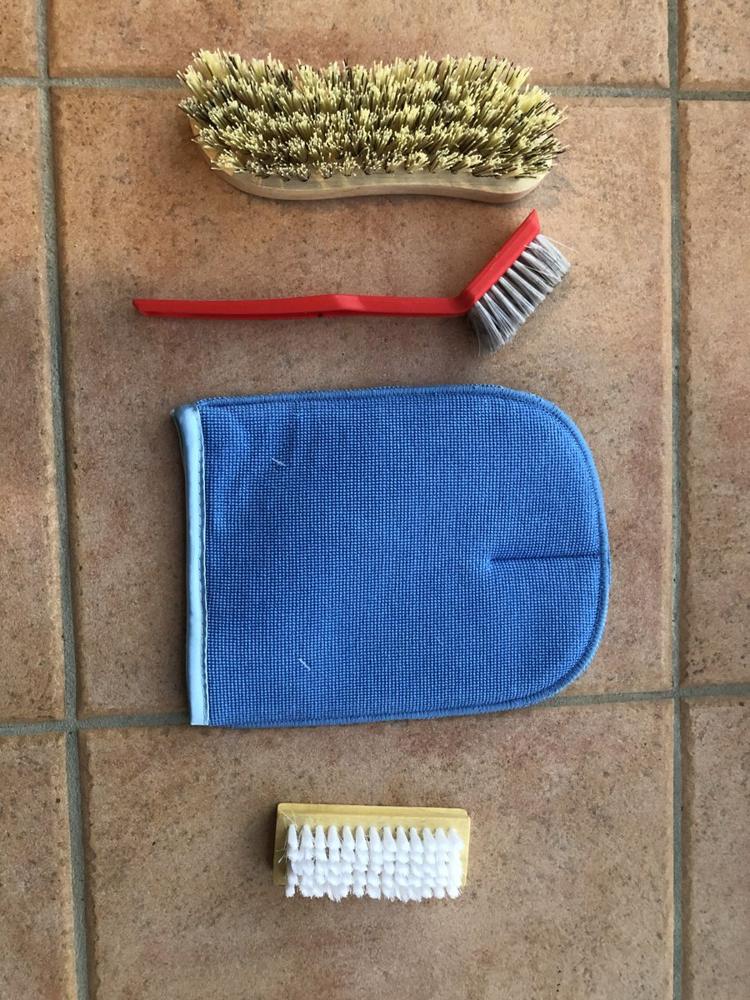
A dustpan and brush is still one of the fastest tools for small floor messes. It is especially useful in kitchens, dining areas, entryways, and homes with children or pets.
Good for:
- Crumbs
- Dry spills
- Small dirt patches
- Quick daily tidy-ups
Vacuum Cleaner
A good vacuum cleaner makes a big difference to dust, hair, dirt, and allergens. Choose one that suits your flooring, storage space, and household needs.
Look for:
- Strong suction
- Suitable floor attachments
- HEPA filter if allergies are an issue
- Pet-hair tools if needed
- Easy-empty dust container or bags
The Australasian Society of Clinical Immunology and Allergy notes that HEPA filter vacuum cleaners “may remove more allergens than other vacuum cleaners”, although all vacuuming briefly increases the amount of dust mite allergen in the air.
Vacuuming regularly also helps protect carpets and rugs because dirt particles can wear down fibres over time. One thing our team notices frequently is that dust accumulates in corners and along skirting boards where most vacuum heads cannot reach flush. Running the crevice tool along these edges once a week makes a noticeable difference, especially in rooms with carpet.
If your floors need a deeper refresh, professional carpet cleaning can remove embedded dirt that a household vacuum cannot reach.

Which Specialised Cleaning Tools Are Worth Having?
Specialised cleaning tools are worth having when they solve a regular problem in your home. You may not use them every day, but they make certain tasks faster, safer, and more effective.
Useful specialised tools include:
- Glass cleaner and squeegee
- Toilet brush and toilet cleaner
- Floor mop and bucket
- Extendable duster
- Oven cleaner
Glass Cleaner and Squeegee
A glass cleaner and squeegee help remove fingerprints, water marks, and streaks from windows, mirrors, shower screens, and glass tables.
Signs you need them:
- Cloudy mirrors
- Smudged windows
- Water marks on glass
- Streaks after wiping
For best results, clean glass on a cloudy day or when the surface is not in direct sunlight. Heat can dry the cleaner too quickly and leave streaks. There are more tips in our guide to window and mirror cleaning, and for windows you cannot safely reach, our window cleaning team can help.
Toilet Brush and Toilet Cleaner
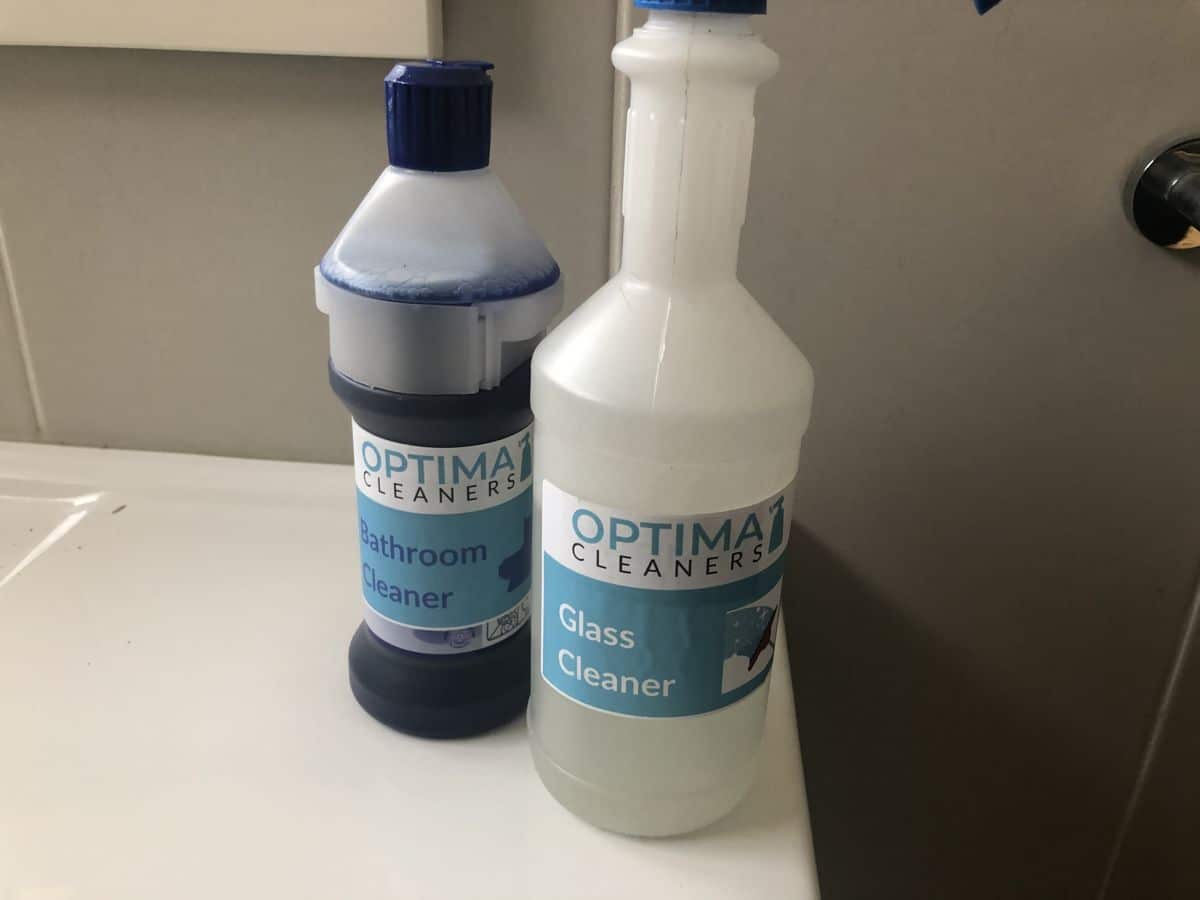
A toilet brush and toilet cleaner are bathroom essentials. Regular cleaning helps prevent stains, odour, and mineral build-up.
Use them for:
- Toilet bowls
- Light stains
- Odour control
- Routine bathroom hygiene
Keep a toilet brush in each bathroom if possible. Store it upright and let it dry between uses.
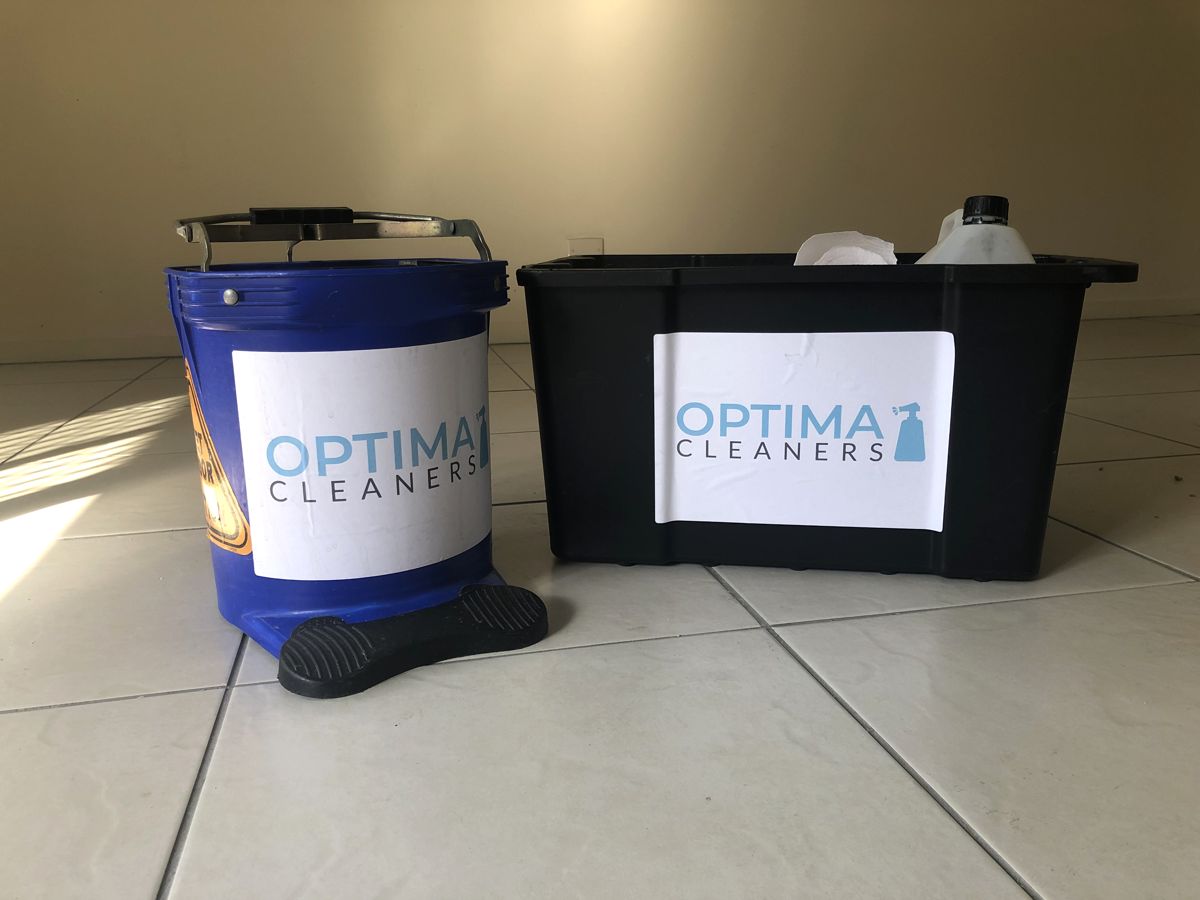
Floor Mop and Bucket
A mop and bucket are essential for hard floors. The right mop depends on whether your floors are tile, vinyl, laminate, sealed timber, or stone.
Best for:
- Kitchen floors
- Bathroom floors
- Entryways
- Sticky spills
- High-traffic areas
Do not overwet timber or laminate floors. Use a lightly damp mop and dry the area if water sits on the surface. Our technicians regularly see warped laminate boards caused by homeowners using a saturated mop. Even a small amount of standing water, if left for more than a few minutes, can cause permanent damage to the floor edge joins.
Duster for High and Hard-to-Reach Areas
An extendable duster helps clean areas that are often missed, such as ceiling fans, light fittings, air vents, curtain rails, and high shelves.
Dust build-up signs include:
- Dust on fan blades
- Grey marks around vents
- Dusty shelves
- Allergy flare-ups indoors
Regular dusting can improve how a room feels and may help reduce airborne dust, especially in homes with allergies. Ceiling fan blades are one of the most consistently missed areas on any clean. A single pass with a microfibre duster takes under a minute but removes a significant amount of accumulated dust that would otherwise circulate every time the fan is turned on.
Oven Cleaner
An oven cleaner is useful when grease, food residue, and burnt-on spills are too stubborn for a normal wipe-down. Choose a product that suits your oven type and avoid harsh fumes where possible.
Use oven cleaner when:
- Grease has hardened
- Food residue is burnt on
- The oven smells while heating
- Smoke appears during cooking
If you are not sure where to start, or the oven has heavy build-up, professional oven cleaning can save time and reduce the risk of damaging the appliance. For what burnt-on grease actually does, see Is a Dirty Oven Dangerous?, or try these oven cleaning hacks that actually work.
What About BBQ Cleaning Supplies?
If you cook outdoors often, your cleaning kit should also include a grill brush, scraper, degreaser, gloves, and cloths reserved for BBQ cleaning only.
BBQ build-up signs include:
- Grease on grill plates
- Smoke before food is added
- Sticky knobs or handles
- Burnt residue under the hood
- Old food smell while heating
For heavy outdoor cooking build-up, a professional BBQ cleaning service can help restore the appliance more thoroughly than a quick scrape.

Challenges We Have Encountered on Jobs and How We Tackle Them
Real cleaning jobs do not always go to plan. Over time, our technicians have run into a range of practical challenges that a standard cleaning guide will not cover. Here is how we handle them and what you can do to help us prepare.
Oven Light Bulb Not Working
Working inside a dark oven cavity makes it easy to miss grease pockets or residue in the corners. Our technicians are routinely equipped with a head torch for exactly this situation, which means the job can still be completed to a high standard without natural or overhead lighting inside the cavity.
We also offer light bulb replacement as an add-on service. If you know the bulb is out before we arrive, letting us know in advance allows us to come prepared with the right globe. It is a small detail that makes a real difference to the quality of the clean.
No Access to Water for BBQ Cleaning
Water access is a standard part of the BBQ cleaning process, but it is not always available, particularly on balconies, rooftop areas, or properties where the outdoor tap is not close to the BBQ.
If we know upfront that water is not accessible, we can prepare non-water-based cleaning solutions before arriving. The cleaning process and end result will differ from the conventional water-based method, and we will advise you on what to expect. The key is advance notice so we can bring the right products and adapt the approach accordingly.
No Power on Site
Oven cleaning in particular can require power access depending on the appliance type and method. If the property has no power, whether during a renovation, between tenancies, or due to an outage, we can still complete the job if we know ahead of time.
A portable generator is available as an add-on for exactly these situations. As with water access, the more lead time we have, the better we can prepare and ensure the service runs smoothly.
Moving a BBQ From a Balcony or Elevated Area
Relocating a BBQ from a balcony to the front porch or courtyard is something we can assist with for smaller units, typically up to a three-burner BBQ. For larger BBQs, moving the entire unit carries a higher risk of damage to flooring, walls, or the appliance itself.
For larger units, our recommended approach is to clean the BBQ in place on the balcony. Removable parts such as grates, burner covers, drip trays, and side shelves can be detached, transported to a dedicated cleaning area, and cleaned thoroughly before being reassembled. This delivers the same result without the risk of damage from an awkward lift.
Oven Glass That Cannot Be Removed
In most ovens, the inner glass panel can be detached from the door to allow for a thorough clean of both sides. Occasionally we encounter models where the glass has been bonded or sealed and cannot be safely removed without risking damage to the door frame or seal.
In these cases, we will always discuss the options with you before proceeding. If cleaning only the external glass surface is not the result you were expecting, we would rather pause and find the right solution than carry out a partial job. Transparency about what is achievable is part of how we work.
Safety Considerations When Cleaning Ovens and BBQs
Oven and BBQ cleaning involves working with heat, gas, electrical components, and powerful degreasers, all of which require a disciplined, safety-first approach. At Optima Cleaners, our technicians are fully trained to handle each situation with care, ensuring outstanding results without compromising on safety, hygiene, or your property’s protection.
Electrical and Gas Safety
Before any cleaning begins, all appliances are turned off, isolated, and allowed to cool completely. For gas ovens and BBQs, we ensure the gas supply is safely shut off and fittings are checked for leaks or wear. Electrical ovens are disconnected from the mains to prevent short circuits or accidental activation.
If an appliance shows signs of electrical damage, it is reported immediately and no cleaning proceeds until the issue is addressed. This step protects both the technician and your equipment.
Chemical Handling and Ventilation
We only use professional-grade, non-caustic cleaning solutions that are safe for indoor and outdoor use. All chemicals are handled with gloves, eye protection, and in well-ventilated areas to avoid inhalation of fumes. For enclosed kitchen spaces, we maintain airflow through open windows or exhaust systems.
Outdoor BBQ cleaning also accounts for wind direction and surface protection to avoid contamination of surrounding areas. All residues are neutralised and wiped away thoroughly to ensure food-safe results.
Surface and Equipment Protection
Before cleaning starts, technicians inspect the appliance and surrounding area. Protective covers are placed around flooring, countertops, or outdoor decking to prevent splashes or chemical contact. We avoid abrasive pads or tools that could scratch stainless steel, glass, or enamel finishes.
When dealing with heavy carbon or burnt deposits, specialised tools and dwell-time techniques are used instead of force, preserving the appliance’s integrity while still achieving a deep clean.
Heat and Fire Prevention
Residual heat is one of the main safety risks in oven and BBQ cleaning. We verify that surfaces and internal components have cooled completely before applying any liquid or chemical cleaner. For BBQs, gas bottles are always disconnected and stored upright in a safe, ventilated area away from ignition sources.
Our cleaning process also includes checking for grease build-up around burners or drip trays, a common fire hazard if left untreated.
Environmental and Disposal Standards
All waste water, degreasing residue, and disposable materials are managed according to local environmental regulations. Nothing is allowed to enter storm drains or garden areas. Used filters and consumables are bagged and disposed of responsibly.
Post-Cleaning Checks
After cleaning, each unit is reassembled carefully, connections are checked, and the oven or BBQ is tested for safe operation. Surfaces are wiped dry and polished to reduce corrosion risk. The area is left clean, odour-free, and ready for safe use.
What Eco-Friendly Cleaning Alternatives Actually Work?
Eco-friendly cleaning alternatives can work well for many everyday jobs. The most useful options are reusable cloths, plant-based cleaners, vinegar, baking soda, lemon, and refillable bottles.
Good eco-friendly swaps:
- Reusable cloths instead of paper towels
- Plant-based cleaners
- Refillable spray bottles
- Baking soda for scrubbing
- Vinegar for glass and limescale
- Lemon for freshness
Baking Soda
Baking soda is useful for gentle scrubbing and deodorising. It can help clean sinks, tubs, grout lines, bins, and some kitchen surfaces.
Best for:
- Odour control
- Light scrubbing
- Sinks and tubs
- Bin freshness
White Vinegar
White vinegar can help with glass, light limescale, and some surface residue. It should not be used on natural stone, waxed timber, or surfaces that can be damaged by acidity.
Avoid vinegar on:
- Marble
- Granite
- Limestone
- Waxed timber
- Some appliance coatings
Lemon
Lemon is useful for freshness and light grease. It is especially helpful in kitchens, but like vinegar, it is acidic and should be used carefully on sensitive surfaces.
For a closer look at the trade-offs, see detergent vs natural cleaning products.
Which Cleaning Products Should You Never Mix?
Some cleaning products should never be mixed because they can create irritating or dangerous fumes. If you are unsure, use one product at a time and rinse the surface before switching cleaners.
Never mix:
- Bleach and vinegar
- Bleach and ammonia
- Bleach and rubbing alcohol
- Different drain cleaners
- Commercial cleaners unless the label says it is safe
The Victorian Government’s Better Health Channel advises never to mix bleach with ammonia, acids or other cleaners, because this can release hazardous chlorine or chloramine fumes. Vinegar is a mild acid, so the same rule applies to it.
Good ventilation, gloves, and label instructions matter. Safe cleaning is always better than stronger cleaning.

How Should You Organise Cleaning Supplies at Home?
Cleaning supplies are easier to use when they are organised by task or room. A simple caddy, safe storage area, and small restocking checklist can make your whole routine smoother.
Helpful storage ideas:
- Use a portable cleaning caddy.
- Group supplies by room.
- Keep bathroom products in bathrooms.
- Store chemicals away from children and pets.
- Label refill bottles clearly.
- Keep a restocking checklist.
If you have children or pets, store cleaning products in a locked cupboard or high cabinet. Never decant products into food or drink containers.
What Should Be in a Room-by-Room Cleaning Kit?
A room-by-room cleaning kit helps you avoid overbuying. Stock what you use most in each area, then keep backup products in one safe storage space.
Kitchen Essentials
- Multi-purpose cleaner
- Dish soap
- Microfibre cloths
- Sponges
- Degreaser or oven cleaner
- Dustpan and brush
Bathroom Essentials
- Toilet cleaner
- Toilet brush
- Glass or mirror cleaner
- Scrubbing brush
- Disinfectant cleaner
- Microfibre cloths
Mould on grout or silicone needs more than a wipe. Our guide to removing mould from your home covers the basics, and tile and grout cleaning handles grout that no longer comes clean.
Living Area Essentials
- Vacuum cleaner
- Extendable duster
- Microfibre cloths
- Upholstery brush
- Glass cleaner
For fabric lounges, dining chairs, and soft furnishings, household tools can handle dust and light crumbs, but professional upholstery cleaning can help with deeper stains, odours, and embedded dirt.
Laundry and Utility Essentials
- Mop and bucket
- Rubber gloves
- Refill bottles
- Spare cloths
- Storage caddy
What Cleaning Supplies Do You Need for a New Home?
For a new home, start with the checklist above and buy the everyday basics first: a multi-purpose cleaner, microfibre cloths, sponges, a dustpan and brush, a mop and bucket, and a toilet brush and cleaner. Add a vacuum that suits the flooring, then glass cleaner and a squeegee. Specialised products such as oven cleaner can wait until you know what appliances the home has. Keep everything in one caddy or cupboard, store chemicals out of reach of children, and read each label before first use.
When Should You Call Professional Cleaners?
Call professional cleaners when the job needs more time, equipment, or experience than a normal household kit can provide. Professional cleaning is also useful when you need a deeper reset before moving, hosting, selling, or returning a rental property.
Signs it is time for help:
- You cannot keep up with cleaning.
- Stains keep returning.
- Oven grease is heavily built up.
- Carpets or upholstery smell stale.
- Dust returns quickly after cleaning.
- You need a full spring clean.
- You are preparing for an inspection.
Optima Cleaners can help with home cleaning services across Brisbane, Perth, Melbourne, Sydney, Adelaide, Canberra and the Gold Coast, along with carpet and rug cleaning, upholstery cleaning, mattress cleaning, oven and BBQ cleaning, office cleaning, and end of lease cleaning.
Got the Tools But Not the Time?
Having the right cleaning essentials makes home maintenance easier, but sometimes life gets busy and even the best-stocked cleaning caddy sits untouched.
Optima Cleaners can help when you need:
- A deeper home clean in Brisbane, Perth, Melbourne, Sydney, Adelaide, Canberra or the Gold Coast
- A fresh start before guests arrive
- Professional oven cleaning in Sydney or other major cities
- Carpet, rug, or upholstery cleaning in all seven cities
- End of lease cleaning
- Office or workplace cleaning
Your cleaning supplies can handle the everyday mess. When your home needs more than a quick wipe-down, Optima Cleaners can take care of the harder work for you. Get a free quote.
A spotless home starts with a practical cleaning kit: the right cloths, tools, cleaners, storage, and a simple routine. Focus on essentials you will actually use, choose products that suit your surfaces, and keep everything organised so cleaning feels less overwhelming.
For bigger jobs, built-up grime, or times when you simply need the house properly reset, professional cleaners can help you get the result without spending your whole weekend on it.
Author Profile

- Radoslav is a managing director at Optima Cleaners, but copywriting has been one of his passions for many years. When he's not hunched over his keyboard, you'll find Radoslav exploring quaint bookstores for inspiration or sipping espresso at his favorite local café, always on the hunt for the next big idea to ignite a brand's success. With a pen in one hand and a coffee cup in the other, Radoslav continues to captivate audiences and breathe life into every brand he touches.
Latest entries
 Oven CleaningOctober 6, 2026Built-In or Balcony BBQ? What to Sort Before a Clean
- Upholstery cleaningSeptember 16, 2026Why Your Freshly Cleaned Sofa Might Look Worse
- Oven CleaningSeptember 5, 2026Is a Dirty Oven Dangerous? What Burnt-On Grease Really Does
- Window cleaningJuly 29, 2025Windows and Mirror Cleaning: Professional Secrets from Optima Cleaners

Previously
Can You Clean a Mattress with a Carpet Cleaner?
January 10, 2025
Next
The Ultimate Guide to Our Professional Oven Cleaning Process
December 17, 2024Latest Blog Posts
October 6, 2026 - Oven Cleaning
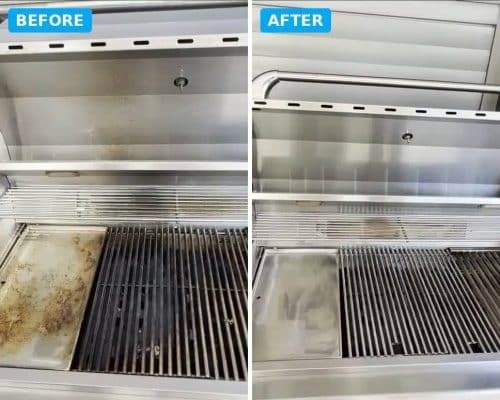
Built-In or Balcony BBQ? What to Sort Before a Clean
Most BBQ cleaning advice assumes a freestanding hooded BBQ on a concrete patio, a few steps from a garden tap....
Read More

September 16, 2026 - Upholstery cleaning
Why Your Freshly Cleaned Sofa Might Look Worse
Why stains reappear after sofa cleaning, what water damage does inside cushion fill, and why a deep clean can look like nothing happened. Four real jobs.

September 5, 2026 - Oven Cleaning
Is a Dirty Oven Dangerous? What Burnt-On Grease Really Does
Most people live with a dirty oven until something forces their hand. Usually that means after a spill has burned...
Read More
July 29, 2025 - Window cleaning
Windows and Mirror Cleaning: Professional Secrets from Optima Cleaners
You know that feeling when you’ve spent twenty minutes scrubbing your bathroom mirror, only to step back and see more...
Read More
July 8, 2025 - Home Cleaning
Essential Australian Home Defense: Protecting Your Property from Our Harshest Elements
Most homeowners think gutter cleaning is about aesthetics or maybe preventing a bit of overflow during a storm. That thinking...
Read More

June 19, 2025 - DIY cleaning, Home Cleaning
What to Clean Before Guests Arrive (And What You Can Totally Ignore)
The text notification pops up on your phone: “Can’t wait to see you this weekend!” Your heart does a little...
Read More

June 3, 2025 - Carpet Cleaning, Home Cleaning
5 Simple Steps to Keep Your Cowhide Rug Looking Brand New
There’s something undeniably captivating about a beautiful cowhide rug. Whether it’s gracing your living room floor with its natural patterns...
Read More
May 16, 2025 - Mattress Cleaning, Upholstery cleaning
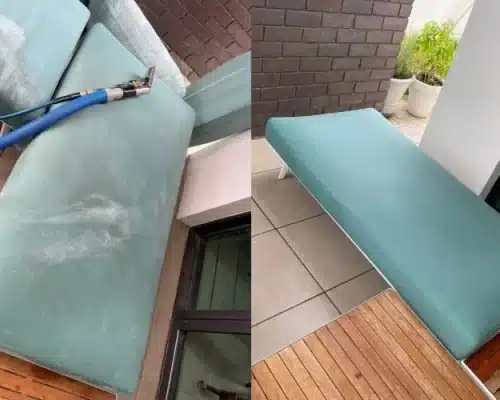
Steam Cleaning vs Dry Cleaning for Upholstery: Which Is Better?
If you’ve got a well-loved sofa or an armchair that’s seen a few too many movie nights, chances are you’re...
Read More
May 6, 2025 - Spring cleaning, Tips and tricks
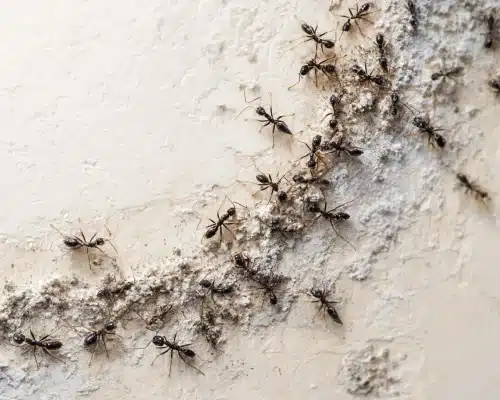
How to stop insects from taking over your home naturally and effectively
Why Insects Invade Your Home in the First Place If you’ve ever spotted a trail of ants across your kitchen...
Read More

April 15, 2025 - Carpet Cleaning, Tips and tricks
6 Methods to Remove Crayon From Your Carpet
It happens in almost every home with small children at some point – that heart-stopping moment when you discover bright...
Read More